It was interesting talking with you and Kevin (NDSU counselor) yesterday on identifying your major. You have the world at your door and it is most exciting! I have been following these fellows’ work and this second session McKenna, Abraham, Sheldrake – The Evolutionary Mind (2/3) presented at the University of California Santa Cruz on June 6, 1998 addresses exactly what I see is NDSU’s major Natural Resource Management that Kevin pointed to yesterday.
Each evolutionary mind session is lead by different author of their book, The Evolutionary Mind. All three sessions are interesting, however, this second session lead by McKenna is central. All three, however, paint the full picture on civilization’s challenge to survive. It is interesting that this was recorded in 1998 with these authors speculating on the year 2004, which we have now lived through. I think McKenna struck the correct cord in assigning an important killing role to global corporate capitalism, which has been defined as psychopathic.
The Corporation: The Pathological Pursuit of Profit and Power
.
Say, we have a date to watch the new movie Interstellar, also about the failure of civilization to address environmental communication, one of the areas in the NRM major. Look forward to discussing this more. It wouldn’t hurt to visit the NRM department. Dad
I have been away from the Dialectic Analytical Man Blog but not away from experiencing, reflecting, thinking, and journaling. When I listened to The Moody Blues album “A Question of Balance”, I realized it was a good place to pick up where I had left off – What does it mean to be in balance and how does one begin? I suggest we begin by listening to what the Moody Blues sing about.
Continuing from a previous post, A Mystery A-Foot, the course International Management, Part Two The Role of Culture begins a four chapter series with Chapter 4 – The meaning and dimensions of culture, Chapter 5 – Managing across cultures, Chapter 6 – Organizational culture and diversity, and Chapter 7 Cross-Cultural communication and negotiation. Chapter 4 begins with the case on Toyota’s a global story addressing the cultural roots of its 2010 accelerator sticking crisis resulting in several deaths and the recall of millions of vehicles. Before we look at this chapter’s case, we will visit the Japanese culture in order to get a feel for it (Luhans and Doh 2012).
We began our study of cross-culture life with the Greek aphorism to know thyself and in applying this we began by adopting the depth psychology investigative framework into ethics – the dao of individuation. By extension we are in the process of applying this depth framework to our study of the American culture and in tandem now to the Japanese culture and its impact on the management of its corporations. To know the Japanese and their culture one has to experiencethem – one has to learn its language and live among the people. In the 1980s James Clavell’s Shogun TV series was very popular – it is a story taking place in 1600 around John Blackthorne, Pilot-Major of the Dutch trading ship Erasmus that during a voyage into the Pacific Ocean is shipwrecked in Japan. Blackthorne has to adapt and is most excited when a Jesuit Priest gives him a translation of the Christian Bible into Japanese, he instantly realizes he will now be able to learn Japanese, survive, and find his way into the culture. He enters the political struggle between warlords, falls in love with a Japanese woman, embraces Japanese life, and is honored as a samurai (Wikipedia)
Clavell’s book and the TV series, Shogun, are entertaining and insightful in providing a view into Japanese culture. Here in more depth but also very entertaining is the three part documentary Japan: Memories of a Secret Empire, that should help us get deeper into the Japanese culture:
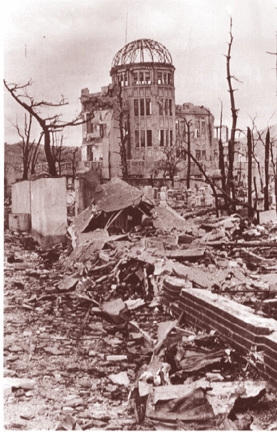
I visited Japan several times in the 1980s and traveled north to south, east to west, visiting the Hiroshima Nuclear Bomb Memorial, and climbing to the top of Mt Fuji, which was much the same as this Mt. Fuji Climb. I climbed with a colleague and it took us 5 hours up a winding path, with eating and sleeping stations just in time for a bowl of hot noodle soup and to yell “bonsai” as the Sun came up. Strait down the back side without a path took us 1 hour – were we tired!
After reading the case and watching these clips on the Toyota case, we are set to apply Chapter 4’s Hofstede’s cultural dimensions theory Wiki defination ; Hofstede’s cultural dimensions theory – Wiki Article, and interviews with Hofstede On Cultural Dimensions,Recent Discoveries, and On Analytical Psychology. In this last interview Hofstede describes the psychoanalytical approach to studying cultural that he suggests went bankrupt and is no longer a relevant approach. How would you respond to Hofstede on this issue? My response is that Hofstede has not kept up with analytical psychology’s advances, which is being pursued in this class and blog. Fons Trompenarras introduces us to his similar work on culture dimensions and his THTConsulting expands his theory of cultural dimensions to managing cross culturally, which will be address in Parts 3 and 4 of the text. Trompenaars BBC interview Japan’s firms ‘panic’ in crisis,directly addresses the Toyota Case crisis.
Hofstede on analytical psychology and culture
We should now be prepared to begin our response to these questions: 1. What cultural dimensions contribute to the differences between how Americans and Japanese workers address management problems, including, operational or product flaw? 2. What are some ways that Japanese culture may affect operational excellence in a positive way? How might it hurt quality, especially when things go wrong? 3. How could managers from Japan and other Asian cultures adopt practices from U.S. and European cultures when investing in those regions? (p.134)
We have introduced our study of culture with Luthan and Doh textbook lead case on the impact of the Japanese Culture on the Toyota MNC. We follow the textbook’s quantitative approach and also add to it our analytical psychology approach, which began with the post on A Mystery A-Foot. Our approach is to use the world wide web to experience the Japanese culture short of going there. From Japan we will move to China that has had an immense impact on Japan and is now in the midst of renewing its historical dominance in and a renewed impact on the world! The Chinese name for its country is Jung Quo – Middle Kingdom.
The investigation deepens by now looking into the topics of ethics and corporate social responsibility. Business schools began adding these interrelated topics to their curriculum in the 1960s and have been tinkering with their contents ever since. Harvard Business School (HBS) spent big money in 2007 revamping its ethics programs and with the 2008 global economic collapse, it had to re-design its programs to include what they had missed – systemic risk. Wikipedia defines systemic risk as the “risk of collapse of an entire financial system or entire market, as opposed to risk associated with any one individual entity, group or component of a system.” The focus at HBS was on the “financial system instability, potentially catastrophic, caused or exacerbated by idiosyncratic events or conditions in financial intermediaries… and is risks imposed by inter-linkages and inter-dependencies in a system or market, where the failure of a single entity or cluster of entities can cause a cascading failure, which could potentially bankrupt or bring down the entire system or market.”
A different view of systemic risk, is presented by David Harvey in the crises of capitalism, where he first reviews several approaches to explain the crisis before settling on a Marxist explanation calling for a “new economic social order that is more responsible, just, and humane.” Marxism is “a method of socioeconomic inquiry based upon a materialist interpretation of historical development, a dialectical view of social change, and an analysis of class-relations and conflict within society” and provides us with another investigative lens. We need to continue journaling about the contents in these links in order to frame the elementary lens being presented for our investigation into the mysteries of globalization.
Okay, even given updates to B-Schools’ ethics courses it did not stop Business Week from grading B-Schools C+ in ethics (Garden 2005, Sept. 5:110), which in graduate school is considered a near failing grade. Google, “business school teaching ethics”, to see other entries on B-school failures, like this Wall Street Journal article, Can Business Schools Really Teach Ethics?, which is a description similar to Concordia’s effort of including ethics in most courses and also having stand-alone courses. The rationale behind the C+ grade was arrived at by looking at the individuals running major corporations like Enron – Smartest guys in the room and Arthur Andersen its partner-in-crime. Hedrick Smith’s Bigger than Enron is an excellent documentary on the Enron meltdown. This is a movie on the people affected by the battle described between good and evil, The Crooked E – The Unshredded Truth About Enron.
What was discovered is that these corporations are being managed by MBA Degree holders from our leading schools of business – Harvard, Columbia, Yale, MIT, UCLA, Chicago, and on. Schumpeter (2009, Sep. 24), in an Economist essay Pedagogy of the Privileged, suggests that schools of business have failed to address the issue of ethics and so, are directly contributing to the continuing systemic risk inherent in capitalism. Schumpeter’s further rationale is that B-Schools are failing because they are beholden to corporation’s deep $ pockets in consulting fees and as the source for the case studies that fill business textbooks, which in turn pay hansom royalties to faculty members.
One of the shallow blueprints to address this privileged pedagogy, Schumpeter mentions, is Harvard’s voluntary pledge “to serve the greater good” and, of course, this greater good is served up by capitalism’s MNCs – the very system another Schumpeter, Joseph, (Capitalism, Socialism and Democracy) predicted would collapse to be replaced by socialism. In fact, the scenarios of Adam Smith, Karl Marx, John Maynard Keynes, and others, while differing in their logics, are all pessimistic about capitalism’s future. Schumpeter’s essay, I suggest, only pricks at the “pedagogy of the privileged” and so I assume he is either fearful about pricking too deeply or most likely does not know what a deep prick is. If business schools are going to prick themselves deeply, they must address the mostly unconscious nature and logic of capitalism (Heilbroner, 1985). With CEOs dominating B-Schools’ Board of Regents, how deeply are business faculty members willing to prick the consciousness that feeds them?
To examine this mystery, the unconscious nature and logic of capitalism, we need a new and deeper approach to ethics and capitalism. Chapter 3’s approach to ethics and social responsibility you have seen before so, except for a few comments I will make, it is here as a reference. I suggest that you gather resources, like your past books and papers you have written on ethics, then journal briefly about your current views on the topic. As a senior, what is your position on ethical behaviour and how did you arrive at this view? In other words, write out your ethical manifesto.
Luthans and Doh (2012: 63) begin their presentation on ethics stating the challenge is “to find an unbiased ethical decision-making processes for international business practices” and then cites the difficulty in doing this is because we do not have a “universal ethical standard” given so many different national and cultural entities. I suggest that the objective of looking for “an unbiased ethical decision-making processes” while laudable has not been affective, C+ grade. I also suggest that we do have a “universal ethical standard” that has not been presented also for the reasons alluded to above. And finally, our authors’ definition of ethics as “the study of morality and standards of conduct” is shallow, one dimensional, and dependent only on rational consciousness. Wikipedia’s definition of morality from the Latin (“manner, character, proper behavior”) is the differentiation of intentions, decisions, and actions between those that are “good” (or right) and those that are “bad” (or wrong), tells us more specifically where we need be more comprehensive, deeper, and thus more effective ethically. Pinky summarizes nicely in the metaphysics of control the hidden challenges of globalization. What are the targets of the investigative framework suggested by Pinky and how might we begin?
Globalization – The Pinky Show
Our authors next present a short section on “ethical theories and philosophy”, which we will extend with a focus on cultural factors. What we can take from this section is the continuing evolutionary tale of Darwin/Wallace & Freud’s Self – biologically and psychologically. In this clip, Barrentine reviews Robert Wright’s chapter 15 in, The Moral Animal, that “explains how the new Darwinism of evolutionary psychology improves upon and complexities of Freudian interpretations of our unconsciously motivated human social behavior.” One has to listen and take notes on this very dynamic explanation of human behavior. What is this saying about today’s popular U.S. culture?
Richard Geldard’s interesting interview on the Birth of Consciousness in Early Greek Thought is particularly insightful, especially when it comes to The History of the Devil, a trait of western theological thinking, which is the source of the above differentiation of morality into good (right) and bad (wrong) (the evil Devil), which further assumes that “the individual is something distinct from the entire universe … and attempts to describe the universe from a detached, objective viewpoint” – the consciousrationalperspective (p.64). This is contrasted with the eastern view which “holds people are intrinsic and inseparable part of the universe” with the objective of understanding how good & evil are complimentary forces organized in the process of developing wholeness, Lao Tzu’s the way of the Dao de Ching. Again, what are the essential ideas of the Dao – the Middle way.
Don Cupitt narrates this interesting BBC Documentary Sea of Faith, in a visit to Jung’s home to examine the development of this thought, which continues where the clip on Darwin and Freud left off. We now see that while Freud looked to past, Jung was looking the the future. What are the implications of this?
Cupitt traces the importance of Darwin/Freud thought, to the evolution of Jung concept of The Self, which is at the center of the new ethic.
The processes of the Self is one moving toward wholeness and it is called the way of individuation and together with the way of the Dao de Ching are ideas in Erich Neumann’s (1942, 1990) book, Depth psychology and a new ethic, that we are now in the midst of investigating. So, begin to compare and contrast the way of the dao and the way of individuation.
Jung’s depth psychology explained here by Dr. Stephen Aizenstat, founding president of Pacifica Graduate Institute, provides us with further understanding of an investigative methodology to augment Holmes and Watson’s skills. Aizenstat points to three results we can expect form adding this investigative tool. First, DP looks at what lies below the surface of life – at the unconscious forces; the second contribution is the “activation of human imagination – that which comes forth in cultures;” and third “we are all asked to see the social, political, economic realities which face us in daily life and in societal affairs.” A very powerful tool, for sure!
Depth psychologist James Hollis in The Lore of Shadowsdefines our investigative scene to “investigate the dialogue between psychology and theology – we are interested in the invisible energies that move the world.” Hollis suggests that we need to dialogue with this invisible world in order to understand and thereby harness the tremendous energies (E) outside of our ego control that are involved. He suggests that we work with Jung’s concept of the Shadow1, where we are “summoned to accountability for the Other – it is about the capacity of the Ego to tolerate the Other.” Hollis nails it in saying “the single biggest difficulty we face as a culture today is tolerating the otherness of the other.” The conflict now simmering between the U.S., Russia, Syria, etc. is a neurosis resulting from no country yet finding its Meaning. Hollis states “the biggest Shadow issue is the degree to which we are willing to open ourselves to mystery.” Or as Jung himself says “we are the origin of all coming evil.” Isn’t this what Marx also said, “the root of the problem is us.”
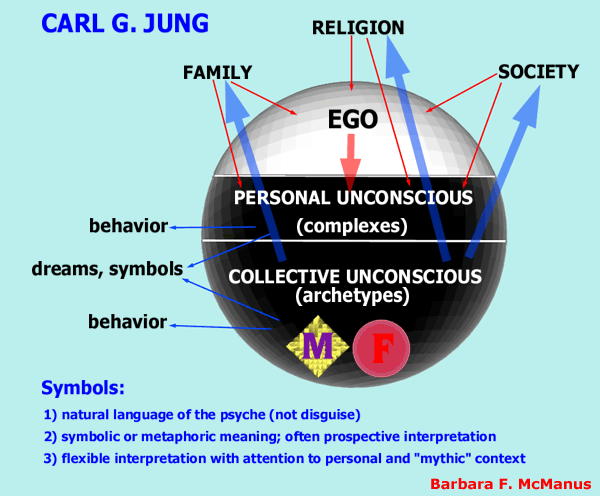
The figure below begins our effort to visualize the dynamic Self – the key element in the new ethic. Our need now is to journal about the ideas presented here – to engage in the pedagogy of thinking-in-writing. The night before this course began on 8.29.13 I had a dream about how the experiential/flipped pedagogy would work itself out. During the next weeks there were several more similar dreams and then the night before this lecturette 9.17.13, I dreamt of an organizational chart of boxes with this lecturette in the upper left-hand position – the dream said the new ethics would be essential to a new way of thinking about the other elements in the cross-cultural management course. To say the least, I am looking forward to what is now unfolding here online-intime.
Jung Elements of the Self
Footnotes 1In Jungian psychology, the shadow or “shadow aspect” may refer to the entirety of the unconscious, i.e., everything of which a person is not fully conscious, or an unconscious aspect of the personality which the conscious ego does not recognize in itself. Because one tends to reject or remain ignorant of the least desirable aspects of one’s personality, the shadow is largely negative. There are, however, positive aspects which may also remain hidden in one’s shadow (especially in people with low self-esteem). Contrary to a Freudian conceptualization of shadow, therefore, the Jungian shadow often refers to all that lies outside the light of consciousness, and may be positive or negative. “Everyone carries a shadow,” Jung wrote, “and the less it is embodied in the individual’s conscious life, the blacker and denser it is.” It may be (in part) one’s link to more primitive animal instincts, which are superseded during early childhood by the conscious mind.
According to Jung, the shadow, in being instinctive and irrational, is prone to projection: turning a personal inferiority into a perceived moral deficiency in someone else. Jung writes that if these projections are unrecognized “The projection-making factor (the Shadow archetype) then has a free hand and can realize its object–if it has one–or bring about some other situation characteristic of its power.” These projections insulate and cripple individuals by forming an ever thicker fog of illusion between the ego and the real world.
References Luthans, F. and Doh, J.P. (2012). International Management: Culture, Strategy, and Behavior. 8e. New York: McGraw-Hill Irwin
Watching talking-heads regarding Obama’s leadership style, one hears both from the right and the left questions on his effectiveness (see Morning Joe 9.12.13). In most cases they are baffled about Obama leadership and support his statement on American exceptionalism that Putin very effectively challenges in his op-ed. On August 30, 2013, as the United States contemplated a response to Syria, I asked this question of the Chinese I Ching: What of the U.S.’s response to Syria? I threw three Chinese coins six times and received Hexagram 26 Ta Ch’u/The Taming Power of the Great with a changing line nine in the third place, which results in Hexagram 41 Sun / Decrease and provides more information on the future. Of course, this question is directed at how Obama should respond to Syria so, as we read this counsel, reflect on how President Obama’s leadership is unfolding and what we discover is that the I Ching anticipates how Barack is now leading.
26. Ta Ch’u / The Taming Power of the Great __________ ____ ____ above Ken Keeping Still, Mountain ____ ____ __________ __________ below Ch/ien The Creative, Heaven __________
The creative is tamed by Ken, Keeping Still. This produces great power, a situation in contrast to that of the ninth hexagram, Hsiao Chu, The Taming of the Small, in which the creative is tamed by the Gentle alone. There one weak line must tame five strong lines, but here four strong lines are constrained by two weak lines; in addition to a minister, there is a prince, and the restraining power therefore is far stronger.
The hexagram has a threefold meaning, expressing different aspects of the concept “holding firm.” Heaven within the mountain gives the idea of holding firm in the sense of holding together; the trigram Ken which holds the trigram Chien still, gives the idea of holding firm in the sense of holding back; the third idea is that of holding firm in the sense of caring for and nourishing. This last is suggested by the fact that the strong line at the top, which is the ruler of the hexagram, is honored and tended as a sage. The third of these meetings also attaches specifically to this strong line at the top, which represents the sage.
THE JUDGEMENT
The Taming Power of the Great.
Perseverance furthers.
Not eating at home brings good fortune.
It furthers one to cross the great water.
To hold to great creative powers and store them up, as set forth in this hexagram, there is need of a strong, clearheaded man who is honored by the ruler. The trigram Chien points to strong creative power: Ken indicates firmness and points to strong creative power; Ken indicates firmness and truth. Both point to light and clarity and to the daily renewal of character. Only through such daily self-renewal can a man continue at the height of his powers. Force of habit helps to keep order in quiet times; but in periods when there is a great storing up of energy, everything depends on the power of the personality. However, since the worthy are honored, as in the ruler, it is an advantage not to eat at home but rather to earn one’s bread by entering upon public office. Such a man is in harmony with heaven; therefore even great and difficult undertakings, such as crossing the great waters, succeed.
THE IMAGE Heaven within the mountain:
The image of The Taming Power Of The Great.
Thus the superior man acquaints himself with many sayings of antiquity
And many deeds of the past,
In order to strengthen his character thereby.
Heaven within the mountain points to hidden treasures. In the words and deeds of the past and there lies hidden a treasure that men may use to strengthen and elevate their own characters. The way to study the past is not to confine oneself to mere knowledge of history, but through application of this knowledge, to give actuality to the past.
Nine in the third place means: A good horse that follows others
Awareness of danger,
With perseverance, furthers.
Practice chariot driving and armed defense daily.
It furthers one to have somewhere to go.
The way opens; the hindrance has been cleared away. A man is in contact with a strong will acting in the same direction as his own, and goes forward like one good horse following another. But the danger still threatens, and he must remain aware of it, or you will be robbed of his firmness. Thus he must acquire skill on the one hand in what will take him forward, and on the other in what will protect him against on foreseen attacks. It is good in such a pass to have a goal toward which to strive.
Finally, I have just touched the conscious surface identifying the issues unfolding among these cultures trying to interrupt their killing. We have Holmes & Watson’s keen investigative mythology on this mystery case of insanity and we need to add additional analytical fire-power from depth psychology(DP). Stephen Aizenstat, founding president of Pacifica Graduate Institute, points to three results we can expect form adding this tool to our investigative tool kit. First, DP looks at what lies below the surface of life – at the unconscious forces; the second contribution is the activation of human imagination – that which comes forth in cultures; and third “we are all asked to see into the social, political, economic realities which face us in daily life and in societal affairs.” A very powerful tool, for sure!
Depth psychologist James Hollis in The Lore of Shadowsdefines our investigative scene is to “investigate the dialogue between psychology and theology – we are interested in the invisible energies that move the world.” Hollis suggests that we need to dialogue with this invisible world in order to understand and thereby harness the tremendous energies (E) outside of our ego control that are involved. It is suggested that we work with Carl Jung’s concept of the Shadow1, where we are “summoned to accountability for the Other – it is about the capacity of the Ego to tolerate the Other.” Hollis nails it in saying “the single biggest difficulty we face as a culture today is tolerating the otherness of the other.” The conflict now simmering between the U.S., Russia, Syria, etc. is a neurosis resulting from no country yet finding its meaning. Hollis states “the biggest Shadow issue is the degree to which we are willing to open ourselves to mystery.” Isn’t this what Marx said in a previous posting, “the problem is Us.”
This week as we read and listen with our analytical psychology lens to unfolding events, beginning links are above, be mindful of the how the players Obama, Putin, Assad, other political personalities, and to the media’s talking-heads portray themselves and the Other. Out task in the coming weeks is to identify the shadow projections taking place in ourselves and between the American and Russian cultural complexes.
Footnotes
1In Jungian psychology, the shadow or “shadow aspect” may refer to the entirety of the unconscious, i.e., everything of which a person is not fully conscious, or an unconscious aspect of the personality which the conscious ego does not recognize in itself. Because one tends to reject or remain ignorant of the least desirable aspects of one’s personality, the shadow is largely negative. There are, however, positive aspects which may also remain hidden in one’s shadow (especially in people with low self-esteem). Contrary to a Freudian conceptualization of shadow, therefore, the Jungian shadow often refers to all that lies outside the light of consciousness, and may be positive or negative. “Everyone carries a shadow,” Jung wrote, “and the less it is embodied in the individual’s conscious life, the blacker and denser it is.” It may be (in part) one’s link to more primitive animal instincts, which are superseded during early childhood by the conscious mind.
According to Jung, the shadow, in being instinctive and irrational, is prone to projection: turning a personal inferiority into a perceived moral deficiency in someone else. Jung writes that if these projections are unrecognized “The projection-making factor (the Shadow archetype) then has a free hand and can realize its object–if it has one–or bring about some other situation characteristic of its power.” These projections insulate and cripple individuals by forming an ever thicker fog of illusion between the ego and the real world.
Chapter two covers three key environments, political, legal, and technological environments. The beginning case is Google in China one of the major MNCs that is currently battling with Facebook, Microsoft, Amazon, and others for dominance in our newly flattened world driven in part by technological forces. This beginning case highlights the linkage and tensions that changes in technology are having on the political environment. The Google in China Case is the face-off between MNCs providing open access to global information and the need of the totalitarian Peoples Republic of China (PRC) (40-41) need to maintain control over its population. This is not a new challenge for China or for that matter, any political state including the U.S. as she currently struggles with her NSA secrecy issues.
I was teaching at the University Of International Business And Economics (Beijing) in January 1989 when my students and workers began to demonstrate for a more open society. The Chinese government could not stop the news from getting in and out due the fax machines that had recently been brought in by MNCs recently opened offices in the country. On Jung 4, 1989 the Tiananmen Square killing took place and my wife and I were finally able to leave Beijing one week later for Hong Kong after having crossed Tiananmen Avenue where the tank-man incident happened. We returned in September to continue teaching international management but under an even more restricted political environment – marshal law. In addition to the American culture, the Chinese culture will be a special focus we will pursue in the class.
The political environment begins exploring the ideologies of individualism, collectivism, and socialism. These are key ideas that need careful definition and their dynamics explored. We are all individuals living collectively and how these are conceived and managed is important – beginning first with our Self, within a family, in work organizations, in an economic/political community, as a nation, and finally in our global community. So, the concept under investigation is, How does the individual co-exist harmoniously, creatively, and productively in a collective? The objective of this lecturette is to identify these levels needing analysis and begin developing our investigative approach.
Our text begins discussing individualism at the economic/political level, which is defined as those adhering “to the philosophy that people should be free to pursue economic and political endeavor without constraint” (37). This is a continuation of the global economic systems of market, command, and mixed economies that were presented in Chapter 1 (17-18). The premise our authors state here is that individualism is, “synonymous with capitalism and is connected with the free-market society, which encourages diversity and competition, compounded with private ownership, to stimulate productivity.” It is argued that “private property is more successful, progressive, and productive than communal property due to increased incentives for maintenance and focus on care for individually owned property”. Luthans and Doh (2012: 37) go on to further support this logic by stating,
The idea of working in a group requires less energy per person to achieve the same goal, but an individual will work as hard as he or she has to in order to survive in a competitive environment. Simply following the status quo will stunt progress, while competing will increase creativity and progress.
This logic needs to be examined especially given the flimsy research support Luthans and Doh present, in sighting that “team performance is negatively influenced by those who consider themselves individualistic: however competition stimulates motivation and encourages increased efforts to achieve goals” (37). When we look at the source used to support this statement, it is a general textbook and we are not given the exact page to check on it (See p. 592, Ch 2 FN 2). What also causes concern is these authors comment that many if not most countries after the fall of the USSR in 1989 are moving “toward the idea of the betterment of society is related to the level of freedom individuals have in pursuing economic goals, along with general individual freedom and self-expression without government constraint” (37). British Prime Minister Margaret Thatcher (1979-1990) is suggested as the “true pioneer in the movement toward a capitalistic society” – these authors suggest it has to be obvious that the capitalistic economic system is the true system.
Next compare how Luthans and Doh present their understanding of collectivism, which they suggest “views the needs and goals of society at large as more important than individual desires” (38). Again they cite a general text book for this idea, which should not impress the critical reader. Their next reference is to Plato suggesting that “individual rights should be sacrificed and property should be commonly owned.” This is followed with references to “classless society” and “national socialism” – Fascism with an extended list of its integral parts ending with the suggestion that collectivism is “opposed to economic and political liberalism” (38). After reading these two poorly presented treatments, which side of these ideologies do these authors support and why? What are your thoughts on this?
If this is not sufficient to determine the ideological bias of our authors, we can dissect next their treatment of socialism, where they state socialism is all about government ownership not interested in profits as the ultimate goal. This does not square with Deng Xiaoping, China’s Premier in 1980, crafting China’s modernization drive saying, “It doesn’t matter if a cat is black or white as long as she catches mice.” Luthans and Doh next bring to the reader’s attention the communist states of China, North Korea, Cuba, and the more moderate but still frightening reddish idea to most Americans of democratic socialism. The next level of fright introduced is with the names of Karl Marx, Fredrick Engels, and Vladimir Lenin – just mentioning these names and most Americans go into a frenzy not having a realistic idea of their thought. Consider this Wikipedia definition of communism and what part of it do we not accept:
We can identify the ideological preferences of our authors and need to begin defending our own. Okay, let’s lighten up and consult these serious authors’ explanation of socialism.
Marx did not believe that governments should own businesses but that its workers should. However, Luthans and Doh did get this right “in a capitalist society only a few would benefit and it would probably be at the expense of others in the form of not paying wages due to laborers” (38). Most do not realize that Marx’s magnum opusDas Kapital: Critique of Political Economy, is a critique written about capitalism, not on Communism. One ought to expect this would be required reading in B-Schools – but it is not, not even at the doctoral level, again why not? What Marx says about capitalism in 1843 is in many ways the same then and now in 2013. So, let’s consider how David Harvey approaches the latest crisis of capitalism with his presentation of a Marxian 7 variable model to investigate moving to a deeper understanding of evolving global corporate capitalism. Marx suggests here that anything is possible, if we only “get off our asses” and to do this requires us to be radical, which he defines as “grasping the root of the problem which is us.” For discussion what does this mean – “the root of the problem is us”?
The next section of the text addresses democracy and totalitarian political systems. Luthans and Doh (2012: 40) define democracy as a “system in which the government is controlled by the citizens either directly or through elections.” They go on to state this interesting point, “every citizen should be involved in decision-making processes” because this “ensures individual freedom since anyone is eligible may have a voice in the choices made.” Okay, but then this U.S. democratic system charted the corporation to be ruled by a select class of individuals, which excluded the worker from actively participating in decisions affecting his/her economic well being. How can the any system define itself as democratic when it excludes most individuals form directly participating in making decisions about his or her work? It cannot and I suggest it is just as totalitarian as “systems in which there is only one reprehensive party which exhibits control over every facet of political and human life” (40). The rest of the description of democracy the authors serve up like “once elected, the representative is held accountable to the electorate for his or her actions and this ultimately limits governmental power” is laughable!
In this Pinky Show clip, defending globalization, Pinky points a finger directly at B-School faculty members and their students, who are described as fishes that cannot see the muddy waters of capitalism they swim in. This leads to economist Richard Wolff’s interview with Bill Moyers on Fighting for Economic Justice and Fair Wages, which examines capitalism’s behavior and its stance against economic justice for its workers. Wolff tells Moyers that the disparity in income between the owners of capital and their workers is “getting wider and wider between those for whom capitalism continues to deliver the goods by all means, [and] a growing majority in this society facing harder and harder times, and that’s what provokes some of us to begin indentifying it as capitalism’s systemic risk issue.” A full list of Moyers interviews with Wolff is available at BillMoyers.com. Prepare to digest these thoughts for class discussion and journal entry.
So, what is your political economic ideology. How do you describe my political economic ideology? A more challenging question for me is how did I come by this viewpoint and why? Answering this takes getting off my ass and grasping the root of the problem, which Marx says is in US – what does this mean?
References
Jones, Gareth R. and George, Jennifer M. (2009). Contemporary Management, 6th Ed. New York, NY: McGraw-Hill Irwin.
Wolff, Richard. (2009). Capitalism Hits the Fan: The Global Economic Meltdown and What to Do About It, Northanpton, Mass., Oliver Press.
The book being used for our study of globalization begins with Environmental Foundation, which has three chapters, Globalization and International Linkages, The Political, Legal, and Technological Environment, and Ethics and Social Responsibility. Chapter 1 Globalization and International Linkages builds on the linkages presented in the video clip Earth from Space introduced in the last entry. As we viewed this documentary we related it with the economic linkages taking placed among countries of the world. Chapter 2 continues presenting linkages between political, legal, and technological environments. Given these foundational elements Chapter 3 addresses how individual ethics impacts the multinational corporation’s (MNC) practices in being socially responsible to its National Charter. There are interesting underlying dynamics in these chapters that are our primary focus to uncover.
Today’s chief executive officers (CEO) are managing many types, sizes, and nationalities of MNCs, which are the dominate institution of our time like the Church and the State in the past and we need to deeplyanalyze them in order to understand what makes them tick. The successful global manager, Luthans and Doh (2012: 4) suggest, is one effectively applying “management concepts and techniques in a multinational environment and adapting management practices to different economic, political, and cultural contexts.” From the principles management textbook (Jones and George, 2009) this is called contingency management, which takes this equation form B = f(P,E), where B is behavior, f stands for function of, P is the person, and E is the environment identified by our authors as economic, political, legal, technological, and cultural factors. These factors are interrelated, vibrating and changing – one of our objectives is to track them in-time on-line and journal about them.
The birth and evolution of the modern corporation is a fun read and should be given carefully study. The Canadian documentary, The Corporation Website, supported by this interesting website (see their Blog) begins with this segment What is a corporation setting the scene for the rise of the modern corporation. Next view this clip on the Birth of the Corporation to examine the issue of the corporation as A legal person. This sets the stage for the Supreme Court decision in The Story of Citizens United v. FEC (2011) that led to record spending in the 2012 Presidential election. Remember Mitt Romney stepping into the fray saying corporations are people. This is a complex and current issue facing MNCs and after watching these clips we can address the question posed in this video clip, Is It Just Corporate Free Speech? As a senior MNC mangers, prepare positions on this issue and post it below.
Globalization has existed since man and woman, to be specific The Real Eve, began moving Out of Africa to circle the globe 150,000 years ago. Luthans and Doh (2012: 4) International Management in Action (IMIA) – Tracing the Roots of Modern Globalization presents an interesting overview as the “forerunner of modern international trade.” I can remember having a conversation with a fellow graduate student in 1970 about the interdependency of world economies. His miss-guided thinking was that the U.S. economy was quite independent. This same year, we started seeing the first Toyota subcompact cars appear on US roads and before long Toyota surpassed General Motors as the number one automobile manufacture in the world. The success of Toyota is a good example for our study of international management and the pressures created by globalization. We will be studying the impact of Japanese Culture on the Toyota Corporation. The point being made here is that to become a successful manager, we need to be keen students of history and how it is affecting culture.
Thomas Friedman’s book, The World is Flat, identifies ten flatteners that are impacting globalization. The trans-continental fiber optic cable and the World Wide Web are key factors in Time Magazine naming its 2006 Person of the Year as “YOU”, indicating it is the individual that can compete on a level playing field – in a flattened interconnected world. With improvements in communication and transportation the ideas of off-shoring and out-sourcing two other flatteners kicked in. If we go to Fargo’s Sanford Clinic for an ex-ray, it can be digitally sent to India to be read by a qualified doctor and by the next morning it will be on our doctor’s desk ready to act on – and for one-third the cost. Who has not asked the operator on an 800 call – where are you locate? Here is a visit Friedman took to India to explore the phenomena of out-souring call centers. It is easy to see from this example the shifting balance of economic power that is now taking place. ABC News Report On Outsourcing To India Part 1/2 prepares us to discuss India’s role in the flatting world.
An appropriate introduction to our interconnected world begins in Chapter 1 with an introduction to social media, specifically with the case on Facebook’s influence. I will venture to guess we all have Facebook and Twitter accounts. I did not get excited about Facebook until it was opened to businesses. I then created a separate page for my business Scherling Videography Facebook and linked it to the Family business FB page Scherling Photography Facebook. The idea is that when our young student customers, Facebook friends, indicate a wedding is in the works, an ad from Scherling Videography is fed to their sidebar. How might the class make use of Facebook and other social media?
When the movie The Social Network about Mark Zuckerberg’s Facebook founding came out, it got a lot of attention and my class at the time went to see it. If you have not seen it, I recommend you do. CBS’s 60 Minutes conducted an interview with Zuckerberg and Charlie Rose also conducted a Zuckerberg interview. You do not need to view these clips fully now but they do give us a beginning look into a very influential global MNC and its controversial, wealthy CEO, which we will be addressing in future chapters. However, what I want to call attention to is Dr. Joseph Burgo’s psychoanalysis of Zukerberg, the movie personality, having a Narcissistic Personality Disorder, which is the first video clip at Burgo’s resourceful website. Then consider the distinction Sam Vaknin’s makes between Narcissist or Psychopathic personalities. Finally, several corporate case histories are presented which lead to Dr. Robert Hare, FBI consultant on psychopaths, to propose a pathology of commerce, which links individual and corporate psycho pathologies. Reflect on these analyses and comment below on how they aid our mystery investigation into global corporate capitalism.
References
Jones, Gareth R. and George, Jennifer M. (2009). Contemporary Management, 6th Ed. New York, NY: McGraw-Hill Irwin.
I have been away from blogging and plan to re-enter the blog-sphere continuing to blog my way through Lao Zi’s Dao de Ching and now through the course Cross Cultural Management that i am facilitating at Concordia College’s Offutt Business School. There are several names this course goes by like international, transnational, cross-cultural, and global management. I think the term globalization captures a deeper sense of the analysis into the processes underlining the transformation to a global village. Luthans and Doh (2012:2), authors of course’s textbook begin by pointing out that “Globalization has and continues to have profound impacts on international management.” This profound impact is identified in this clip by President Obama on Globalization, After I watched this clip, other related clips appeared on the sidebar feed and I selected “Globalization” – The Greatest Criminal Heist In History, a short comment by Prof. Herman Daly, a former senior World Bank economist, suggesting multinational corporations (MNC) are criminally hijacking our economic life, an issue of globalization we need to pay attention to.
I can remember vividly driving into Norman Oklahoma on the evening of 20 July 1969 just as astronaut Neil Armstrong was landing on the Moon and taking his One small step for man, one giant leap for mankind. The whole world was riveted to TVs watching this event unfold as the image of the Earth rising over the Moon mesmerized the world. It is this event on this date that we became globally conscious of our responsibilities to maintain a healthy Earth – it was the birth of the environmental movement. Here is what the World watched – the view of the Earth rising over the Moon, that motivates our study of globalization. After watching these clips, reflect in your journal what you are feeling and thinking.
We have come a long way in the last 44 years and this new PBS Nova special Earth from Space identifies the topics the 21st Century Global Manager, YOU, need to take a firm stand on – the Earth as system of dynamically interrelated systems. Man’s impact on the Earth has become very significant and it is critical to understand this and act! This is a long documentary so watch it in segments over the next week and again reflect in your journal on the implications for managing. Besides the YouTube clips hyperlinked here, there are Wikipedia hyperlinks above on globalization and systems theory that present readings that we can also work into our journaling and papers being written for the course – might as well get started.
The pedagogy of the course uses the Luthans and Doh (2012) textbook, International Management: Culture, Strategy, and Behavior, which is well-written and comprehensive. So, reading it smartly, that is analytically, is necessary if we are going to craft a successful strategy to get top grades in the course – this of course is our goal. The class pedagogy is experiential, or what today is being called a flipped course, which puts responsibilities on each of us to generate our learning experiences, reflect on them as they relate to our theories, keep a journal, write papers, and complete projects that challenge us to think creatively. I call this pedagogy thinking-in-writing – in other words, we do not think unless we write. A Kong Fuzi, Confucius, saying with the last line added by Shr Lingyuan, Scherling, captures our course’s pedagogy:
I hear and I forget, I see and I remember, I do and I understand, I write and I create.
So, retrieve from your bookshelf the book you used in your writing class and begin reviewing it. The book I keep by my side is Rosenwasser and Stephen (2009) Writing Analytically. Read the Journaling, Paragraph Types, and Thinking-in-Writing Mechanics documents posted at the Moodle page and start journaling that is, thinking-in-writing.
Okay, we have an important mystery to solve, what is becoming of our global village? Not all goes well a decade into the 21st Century – poverty, hunger, wars, economic and climate meltdowns are not well addressed. Growing up I enjoyed the Sherlock Holmes stories and the current movies with Robert Downey Jr. and Jude Law are action packed! Two new current TV series, Sherlock and Elementary, about modern day versions of the detectives, are interesting; especially of interest Watson is a woman in Elementary. The importance of the female is part of the mystery carefully considered in our study of globalization.
However, I really enjoyed Maria Konnikova RSA presentation of how Sherlock Holmes teaches “us to optimize not only our own everyday existence, but our broader contributions to society and the lives of those around us”. This is the challenge and the course objective, so understanding how Konnikova’s presentation helps us develop our analytical skills and how does this individual skill impacts the collective? “A mystery is a foot” and Maria now suggests we often need to take a “walk-in-the-park” – Why?
References:
Luthans, F. and Doh, J.P. (2012). International Management: Culture, Strategy, and Behavior. 8e. New York: McGraw-Hill Irwin
Rosenwasser, D. and Stephen, J. (2009). Writing Analytically. 5e. Boston: Thomson.
Again at the end of the Spring Term 2013 at Concordia College the case study dealing with Anima Projection lead me to the Anima documentary, which then natural ought to lead one to the story of Orlando and the theme of bisexuality. I stopped blogging for the summer but am now taking of the quest of individuation.
Orlando tells the story of a young man named Orlando, born in England during the reign of Elizabeth I. He is briefly a lover to the elderly queen. After her death he has a brief, intense love affair with Sasha, ostensibly a princess in the entourage of the Russian embassy. This episode, of love and excitement against the background of the Frost Fair held on the frozen Thames River during the Great Frost of 1608, is one of the best known of the novel. It is said to represent Vita Sackville-West’s affair with Violet Trefusis.
Following Sasha’s sudden departure and return to Russia, the desolate Orlando returns to writing The Oak Tree, a long poem started and abandoned in his youth. He meets with a famous poet, Nicholas Greene, whom he joyfully entertains, but who criticises Orlando’s writing. Later Orlando feels betrayed when he learns that he is the foolishly depicted subject of one of Greene’s subsequent works. A period of contemplating love and life leads Orlando to appreciate the value of his ancestral stately home, which he proceeds to furnish lavishly. There he plays host to the populace.
Ennui sets in and the harassment of a persistent suitor, the Archduchess Harriet, leads to Orlando’s fleeing the country when appointed by King Charles II as ambassador to Constantinople. Orlando performs his duties well, until a night of civil unrest and murderous riots. He falls asleep for a period of days, resistant to all efforts to rouse him. Upon awakening he finds that he has metamorphosed into a woman – the same person, with the same personality and intellect, but in a woman’s body.
The now Lady Orlando covertly escapes Constantinople in the company of a Gypsy clan. She adopts their way of life until its essential conflict with her upbringing leads her to head home. Only on the ship back to England, with her constraining female clothes and an incident in which a flash of her ankle nearly results in a sailor’s falling to his death, does she realise the magnitude of becoming a woman. She concludes it has an overall advantage, declaring “Praise God I’m a woman!” Back in England, Orlando is hounded again by the archduchess, who reveals herself to be a man, the Archduke Harry. Orlando evades his marriage proposals. She goes on to live switching between gender roles, dressing alternatively as both man and woman.
Orlando soon becomes caught up in the life of the 18th and 19th centuries, holding court with the great poets (notably Alexander Pope). Nick Greene reappears, apparently also timeless, and promotes Orlando’s writing, promising to help her publish The Oak Tree.
Orlando wins a lawsuit over her property and marries a sea captain, Marmaduke Bonthrop Shelmerdine. In 1928, she publishes The Oak Tree, centuries after starting it, and wins a prize. As her husband’s ship returns in the aftermath of her success, she rushes to greet him.



 Dialectic Analytical Man